Informational Signs — Meaning and Full List
What are informational signs?
Informational signs guide you on the road: directions to cities, distances, service areas, hospitals, parking lots, and rest areas. Unlike warning or prohibitory signs, they don't impose a mandatory action or warn of an immediate risk — they help you find your way and plan your trip. They are indispensable on unfamiliar roads and long journeys. In the IMT theory test they appear less often than warning or prohibitory signs, but they are still a tested topic, especially those related to motorways and parking areas.
Full list of informational signs (30)
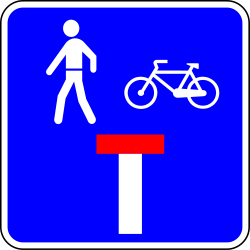
Dead end street with a passage for pedestrians and cyclists
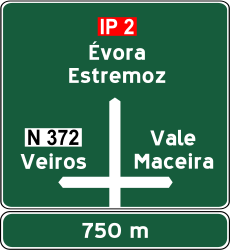
Information about the directions of the crossroad
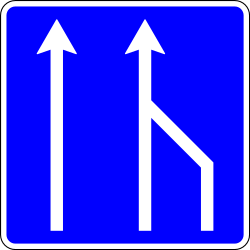
End of a lane
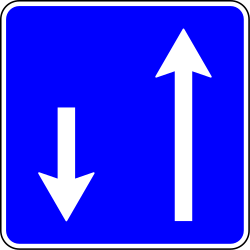
Road with two-way traffic
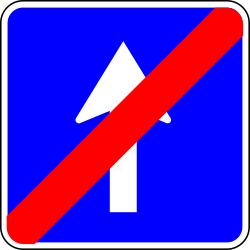
End of the road with one-way traffic
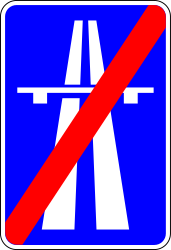
Motorway Ends
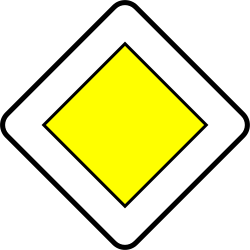
Priority road ahead
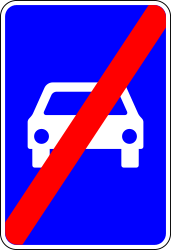
End of the expressway
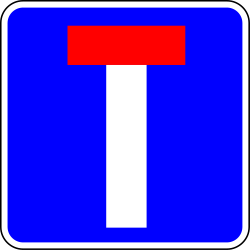
Road ahead is a dead end
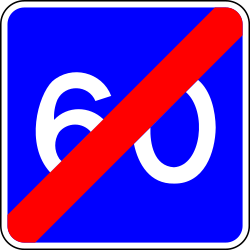
End of the recommended speed
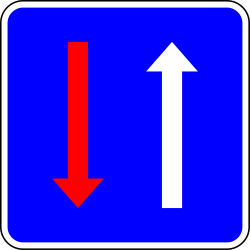
Priority over oncoming traffic, road narrows
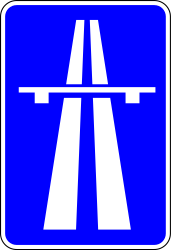
Motorway begins
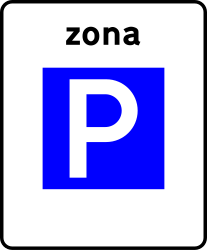
Begin of a parking zone

Priority road ends
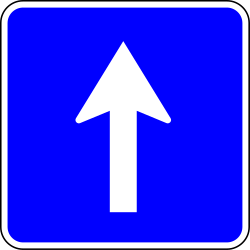
One-way traffic
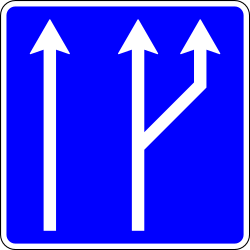
Begin of a new lane
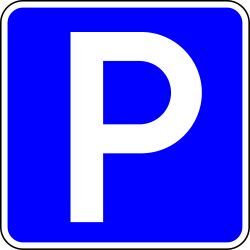
Parking permitted
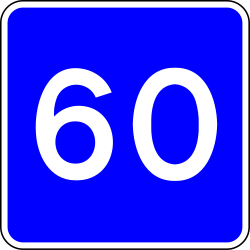
Recommended speed

Road bends ahead
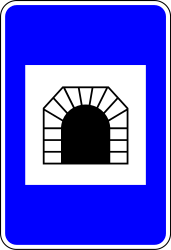
Begin of a tunnel
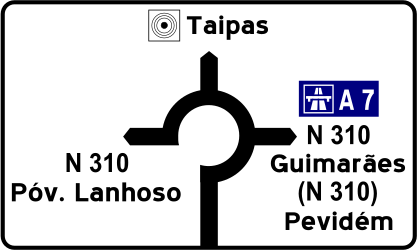
Information about the directions of the roundabout
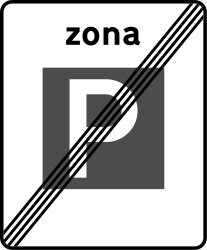
End of the parking zone

Road bends ahead
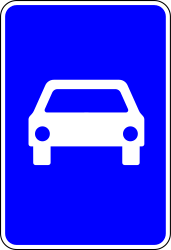
Begin of an expressway
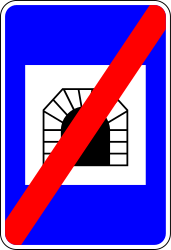
End of the tunnel
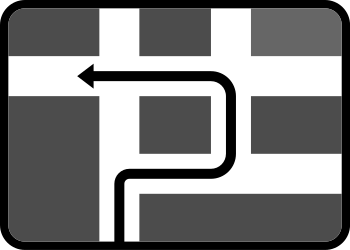
Route to be followed in order to turn left
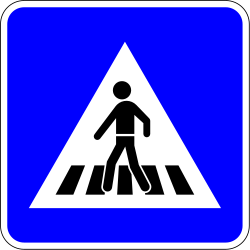
Pedestrian crossing - People can cross
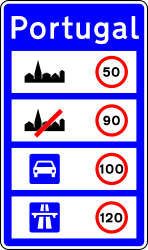
National speed limits
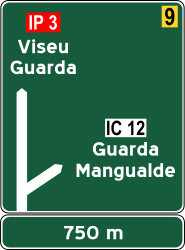
Information about the destination of the ramp
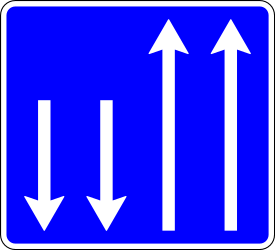
Lane usage and direction overview
Exam tips: informational signs
Not every blue sign is purely informational: "One-way traffic" and "Parking permitted" have legal effect, while "Recommended speed" is just a suggestion — the exam likes to test this distinction.
"Start/end" pairs (motorway, expressway, tunnel, parking zone) change the traffic rules — for example, the mandatory minimum speed and the pedestrian ban only apply between the start sign and the end sign.
"Recommended speed" is not binding; don't confuse it with the prohibitory "Speed limit" sign (red circle), which is mandatory.
For direction signs at crossroads and roundabouts, the question usually tests whether you can read the relative position of the arrows, not just the place names.
Common mistakes with informational signs
Treating recommended speed as mandatory
"Recommended speed" is an informational sign (blue rectangle) and does not legally bind the driver, unlike "Speed limit", which is a mandatory prohibitory sign.
Missing the end of a motorway or expressway
After "Motorway ends" or "End of the expressway", specific rules such as the mandatory minimum speed no longer apply — a common mistake is assuming those rules still hold.
Confusing one-way with priority
"One-way traffic" indicates the allowed direction on a road; it should not be confused with "Priority over oncoming traffic", which is about who goes first at a narrowing, not about the direction of travel.
Frequently confused signs in informational signs
These pairs show up side by side in the exam precisely because they look alike — compare them closely.
Recommended speed
End of the recommended speed
The second has a diagonal gray bar over the number — a sign that the recommendation (not an obligation) no longer applies.
Motorway begins
Begin of an expressway
Very similar pictograms (a two-lane road with a bridge), but the associated rules differ — the expressway doesn't have, for example, the same access requirements as the motorway.
One-way traffic
End of the road with one-way traffic
The second shows the same rectangle but crossed by a diagonal bar — it indicates that from that point the road returns to two-way traffic.
Already know the informational signs? Test what you learned with a quick quiz or a full mock exam.