Priority Signs — Meaning and Full List
What are priority signs?
Priority signs regulate who goes first at intersections, junctions, and roundabouts: yield signs, mandatory stop signs, and priority road signs. They are essential to avoid collisions at intersections, one of the most dangerous points in both urban and rural driving. In the IMT theory test, priority questions often combine sign recognition with general right-of-way rules, so it's important to know not just how to identify the sign but how to apply the correct rule in practice.
Full list of priority signs (16)
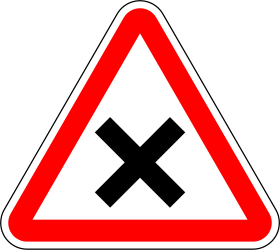
Uncontrolled crossroad ahead
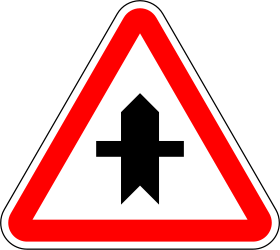
Crossroad ahead, side roads to right and left
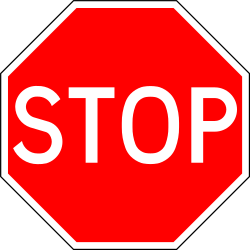
Stop and give way to all traffic
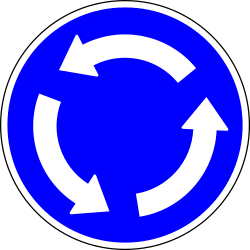
Direction of traffic on roundabout
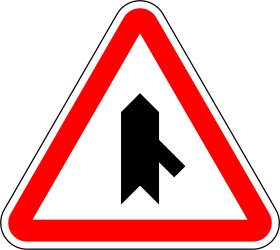
Crossroad with sharp side road on right side
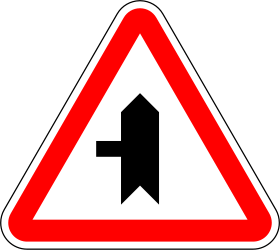
Crossroad ahead with side road to left
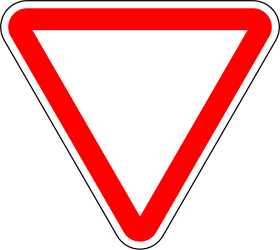
Give way to all traffic
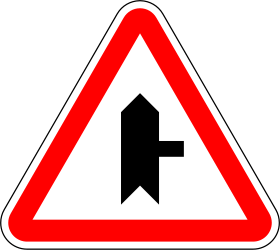
Side road on the right warning
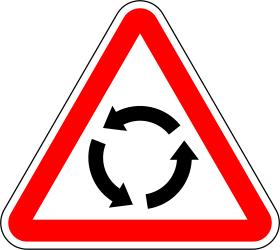
Roundabaout ahead
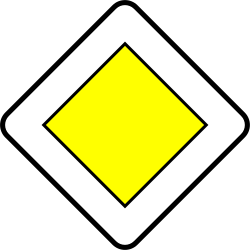
Priority road ahead
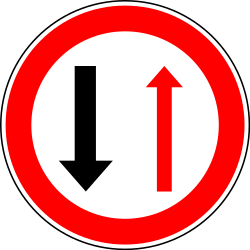
Give way to oncoming traffic, road narrows
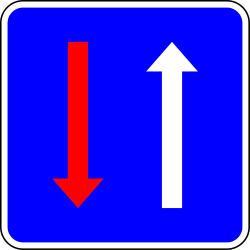
Priority over oncoming traffic, road narrows
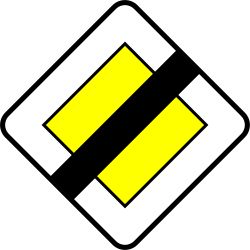
Priority road ends
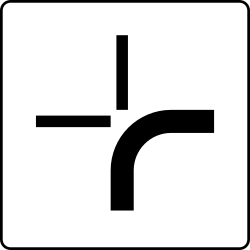
Road bends ahead
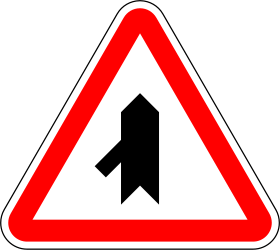
Crossroad with sharp side road on left side
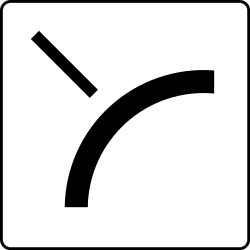
Road bends ahead
Exam tips: priority signs
The shape of the sign already gives half the answer: an inverted triangle means "yield" (slow down and stop only if necessary); a red octagon means "stop" (a full stop is mandatory, even with no traffic in sight).
"Priority road ahead" and "Priority road ends" change right-of-way along the entire road, not just at the junction where they're placed — a common mistake is thinking the rule only applies right there.
At road narrowings, check the color of the arrows: on the "Priority over oncoming traffic" sign your arrow is red (you have priority); on the "Give way to oncoming traffic" sign the opposite arrow is red (you must yield).
At a roundabout with no explicit priority sign, the same logic as the "Yield" sign applies: whoever is entering yields to whoever is already circulating.
Common mistakes with priority signs
Confusing yield with stop
"Yield" allows you to proceed without a full stop if there's no traffic; "Stop: yield" always requires a complete stop, even with a clear road. It's the most commonly forgotten legal nuance in this category.
Mixing up priority and yielding at a narrowing
"Give way to oncoming traffic" and "Priority over oncoming traffic" use the same rectangular pictogram with two arrows — only the color of your arrow changes, which makes them one of the most commonly swapped pairs in the exam.
Thinking priority only applies where the sign is
"Priority road ahead" changes the road's status until the "Priority road ends" sign — many candidates answer as if priority only applied at the junction where the sign is placed.
Frequently confused signs in priority signs
These pairs show up side by side in the exam precisely because they look alike — compare them closely.
Give way to all traffic
Stop and give way to all traffic
Different shape (triangle vs. octagon) but the same family of meaning — the shape is what determines whether the stop is mandatory or only conditional.
Give way to oncoming traffic, road narrows
Priority over oncoming traffic, road narrows
Almost identical pictogram — the only visual clue is which of the two arrows is filled in red.
Priority road ahead
Priority road ends
The second shows the same yellow diamond but crossed out with gray bars — it indicates the road stops having priority from that point on.
Already know the priority signs? Test what you learned with a quick quiz or a full mock exam.